Pages

Saturday, January 21, 2012

Who Asks for Less Gets More, Serbian Folktale

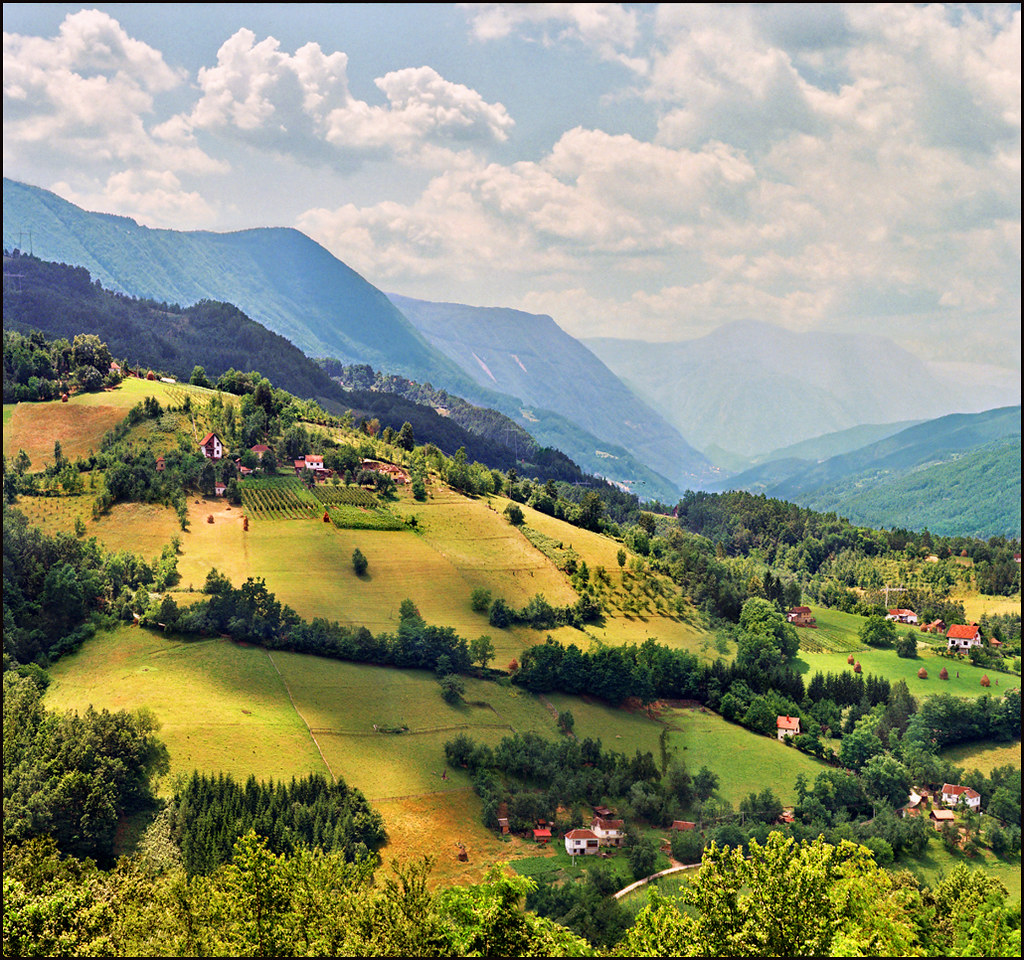
Serbia of Eastern Europe is the land of hills traversed by the rivers at its heart and northern part. The southern part is dominated by spectacular mountains. Once upon a time, in those impressive lands lived three brothers…

They possessed nothing, but a single pear tree. So they took turns in guarding this pear tree. One day, God sent an angel to see how brothers were living and to give them assistance, if they needed it. The angel disguised himself as a beggar. He asked the youngest brother, who was guarding the pear tree that day, if he could give him a pear. The brother picked one of his pears and gave it to the angel saying, “Here, take one from my share of pears, for I cannot give you any from my brothers.” The angel thanked him and left.

The following day, it was the middle brother’s turn to guard the pear tree. So the angel asked him the same question, if he could have a pear. The middle brother also picked one of his pears and gave it to the angel saying, “Here, take one from my share of pears, for I cannot give you any from my brothers.” The angel thanked him and left.

The following day, it was the oldest brother’s turn to guard the pear tree. So the angel asked the same question again, if he could have a pear. The oldest brother also picked one of his pears and gave it to the angel saying, “Here, take one from my share of pears, for I cannot give you any from my brothers.” The angel thanked him and left.

On the fourth day, the angel disguised himself as a monk. He found all three brothers and said, “Come with me and I shall reward you for your generosity and give each of you the one thing you desire the most.” The brothers followed him without a word.

When they came upon a field full of pigeons, the angel turned to the oldest brother and asked him, “What do you desire the most?”

The oldest brother replied, “I want all these pigeons to turn into sheep and I want them all to be mine.”

The angel turned all pigeons into sheep and said, “You got what you asked for. So, now live with it.”

Then, he continued walking with two other brothers. When they got to a large stream, the angle turned to the middle brother and asked him, “What do you desire the most?”

The middle brother replied, “I want all this water to turn into wine and I want it all to be mine.”

The angel turned the water into wine and said, “You got what you asked for. So, now live with it.”

Then, he continued walking with the youngest brother and asked him, “What do you desire the most?”

The youngest brother answered, “I only wish for a wife, who is kind and compassionate.”

They kept on walking until they reached a village, where the angel directed him to a young woman, who was kind and compassionate. After the wedding, the angel took the young couple to the forest and left them there.

After a year, the angel came back to see how the brothers were doing and to see if they needed any assistance. The angel again disguised himself as a beggar. First he went to see how the oldest brother was doing. He found him in the field full of sheep, so he asked him for a piece of cheese. But the brother refused saying, “If I were to give everyone a piece of my cheese, nothing would be left of all my wealth.”

In that instance, the angel turned the sheep back into the pigeons and said, “Such wealth is not for you, go and guard the pear tree again.”

After that, he went to check on the middle brother and asked him for a glass of wine. But the brother refused saying, “If I were to give everyone a glass of my wine, nothing would be left of all my wealth.”

In that instance, the angel turned the wine back into the water and said, “Such wealth is not for you, go and guard the pear tree again.”

Finely, the angel went to see the youngest brother and his wife. In the forest, he found a small hut. He asked them if they would let him spend the night in their hut. They welcomed him warmly and asked for forgiveness saying, “We are poor and cannot welcome you like we ought to.”

The angel replied, “Whatever little you have is enough for me.” They shared the last piece of bread and the last glass of wine with the angel.

The following morning, the angel turned the small hut into a palace and filled it with plenty of everything. The young couple lived happily with plenty of food and warmth till the end of their time.


Sunday, January 15, 2012

Craft Above All, Serbian Folklore

In the far eastern corner of Europe, in the spectacular land of Serbia, once lived an emperor.

One day, he took his wife and daughter on a ship to admire his lands from the sea. When the weather changed bringing strong winds and high waves, it pushed the ship to an unknown land. The emperor was not prepared for such turn in events. He didn’t have any money with him or any skills to earn a living in order to support his family. The only job he was offered was as a herdsman. It was easy to watch the animals and it didn’t require much skills.

The years went by and the herdsman’s daughter grew into a beautiful young woman. One day, she caught an eye of the emperor’s young son from the unknown land. The parents were not happy with their son’s choice. But with his persistence, they agreed to the marriage. So they send a vizier, who upon meeting the herdsman said, “The emperor’s son wishes to marry your daughter.”

To the vizier’s surprise, the herdsman replied, “What kind of a craft does the emperor’s son know?”

Confused vizier continued, “Why should an emperor’s son need to know a craft? People learn crafts to support themselves, and the emperor’s son has his lands that bring him money.”

The herdsman insisted saying, “If the emperor’s son would like to marry my daughter, then he needs to know a craft.”

The royal court was startled by this. But the young prince wouldn’t give up so easily. So he went all over the town looking for a craft that he could learn fast. He came across a place where rush mats were made. This craft seemed as one he could master fast. And so he did. Then he made a special rush mat to be shown to the herdsman. The herdsman examined the mat carefully from all sides and asked, “How much is this worth?”

He was satisfied with the price he was told and added, “If I had learned that craft when I was young, I wouldn’t be tending the village oxen today.”

Then the herdsman told his story to the emperor and empress, how he happened to be living in their land and why he wanted the young prince to learn a craft. In return, after the young couple got married, the emperor and empress gave the bride’s father a ship, so he could return to his land.


Sunday, December 11, 2011

The Christmas Tree Story

A long time ago, when there was no TV or any type of electronics people were spending evenings telling stories. The stories were passed from generation to generation and this is how this story was retold and passed on to us.
Ages ago, people worked hard from dawn till night from early spring to late autumn gathering resources for the whole winter. During the winter time, women wove warm clothes and men made sure that there was always enough wood in the stove to keep the fire blazing and the place warm.

 All people looked forward to Christmas. The Christmas time meant meeting with relatives and friends, going to the Church, taking part in Christmas carols.
There was a young couple, who was married not for a long time and didn’t have any kids. Peter enjoyed listening to the bible stories. One of them about Adam and Eve was of particular interest to him. The image of a paradise tree full of apples was constantly on his mind. It reminded him of spring time, when everything bloomed. He dreamed about having such a tree during the winter time.

One day, an idea came to his mind. He went to the nearest forest and a small coniferous fir tree caught his eye. Peter brought the small fir tree home and put it in front of a window. So the tree would still have some natural day light.

Peter’s wife liked the tree, but it was missing the fruits. So she brought fruits and nuts that were stored in the pantry. They attached strings to fruits and nuts and hang them on the tree. Peter made few ornaments from straw that were shining like gold. The tree looked beautiful.

All relatives and friends visiting Peter’s hub during the Christmas time loved the tree with its decorations. From now on Peter’s family had Christmas tree every year.

The relatives and friends followed Peter’s idea of a Christmas tree. This custom spread from house to house, from village to village, from country to country. Today almost every home has a Christmas tree.

Interesting People: Maria Sklodowska-Curie – the genius of science

Maria Sklodowksa was born in Warsaw in 1867 and received her first lessons in physics and chemistry from her father. Both parents were well-known teachers and encouraged education. Back then advanced study was not possible for women in Poland. So Maria moved to Paris, where she studied at Sorbonne. Here she also met her husband Pierre Curie. Together, they discovered polonium and radium. They received a Nobel Prize in Physics. She received the second Nobel Prize in Chemistry. She gave the beginning to the world’s first research for treatment of neoplasms and founded the Curie Institutes in Paris and Warsaw, which remain major medical research centers. She died from exposure to the radium that made her famous.

Thursday, December 1, 2011

Santa Claus Story

December 6th in Poland is a day, when Santa Claus brings presents to the kids. (FYI: Santa Claus in Poland is called St. Nicholas).

A long long time ago and far far away, there was a boy by the name of Nicholas. He had all the toys he wanted, plenty of clothes and food and loving parents. He wasn’t missing anything. But Nicholas was a very smart boy. He liked observing everything that was surrounding him including the people. He took a notice of many kids hardly having anything. It made him sad. He didn’t understand why he had so much and others so little. So he decided to take the matters into his own hands.

Every Sunday, he would take as much food as he could carry to the church and after the mass, he would give it away to the kids. Once a year, he would give away all the toys that he received during the last year.

When Nicholas grew up, he inherited a big fortune and decided to share it with others. His good deeds continued and one day he was named Saint Nicholas. His house became a workshop, where throughout the year he makes the toys for kids and on December 6th gives them away.

Interesting Historical Facts: Chopin and his story

Frederic’s father was a violin player and his mother was a piano player. According to the legend, Frederick was born, while his father was playing violin. And as a young boy he cried, when his mother was playing piano. However, Frederic as a young boy was able to play piano music from just listening to what his mother played. Parents seeing boy’s talent hired a teacher. Very quickly Frederic surpassed his teacher. At the age of seven, he composed his first music. At the age of eight, he gave his first concert. At the age of twenty, he left Poland for France, his father’s native country. At the age of thirty nine, he died of tuberculosis in Paris. His sister brought his heart back to Poland. It rests at the Holy Cross Church in Warsaw. Frederic Chopin was one of the greatest pianists and masters of Romantic music of his time.

Wednesday, November 23, 2011

St Martin’s Croissants, Polish Legend

In Poland, November 11th is an Independence Day. In Poznan November 11th has a double meaning. The legend will explain.


A long time ago, in a city of Poznan, there was a baker named Joseph. He heard a story of St Martin, who saved a poor man by giving him his warm jacket. Joseph wanted to make a good deed and was thinking about the best way to help those, who were less fortunate. Then he had a dream in which St Martin came to him on a horse and left without any word. However, a horseshoe fell loose. Joseph looked at the horseshoe and at the same time an idea came to him. He decided to use his skills as a baker and make croissants in a shape of a horseshoe filled with poppy seeds, nuts and raisins. Joseph woke up from his dream, when it was still dark and started making the croissants through the morning. During the day he gave them all away to those who were hungry. His good deed became a tradition. In the following years, other bakers from Poznan joined Joseph in making croissants. The tradition started in 1891 and continues till today and always falls on November 11th.

True story:
In 1891, local priest from St Martin’s parish appealed to its parishioners to take an example from St Martin and help the poor. One of Poznan’s bakers, Joseph Melzer, made croissants in a shape of half moon filled with poppy seeds, nuts and raisins. The croissants were given away to the poor after a mass. In the following years, other bakers from Poznan joined Joseph in making croissants. They were given to the poor and whoever could afford them would pay.